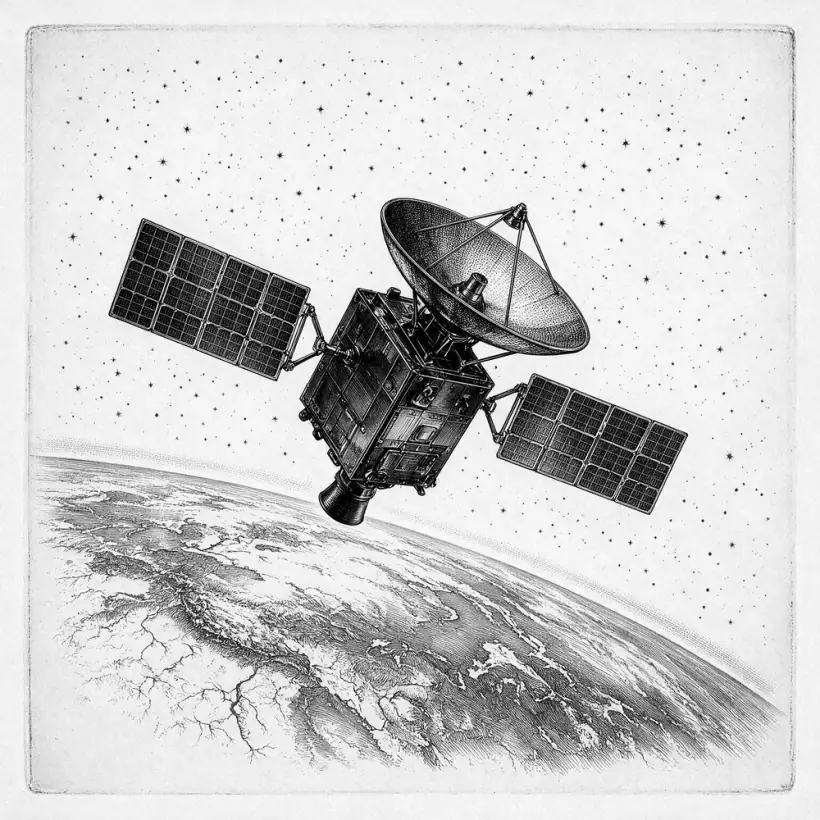
Space is treated here as infrastructure, not as venture. The question is not which spacecraft succeeds but which capabilities a state or an alliance cannot afford to lack: persistent radar coverage, sovereign downlink, resilient timing, and the analytical layer that renders all three into decisions. Positions are taken across that spine and held through programme cycles longer than most funds exist.
Central Europe now carries more weight in this field than its size suggests — serious radar and sensing engineering, a defence procurement environment that has changed permanently, and an industrial base with the power, fibre and precision manufacture on which the ground segment actually runs. The families' roots are in railways, energy, fuel and information systems; those are the roots this industry grows from on the ground. Presence in the region predates the attention it now receives.
The horizon is measured in decades because the assets are. A constellation is a manufacturing line, a spectrum position and a customer relationship with an institution that does not change supplier lightly. Capital of this kind must be able to wait through a failed launch, a delayed programme and a change of government — which is why it is family capital rather than fund capital.